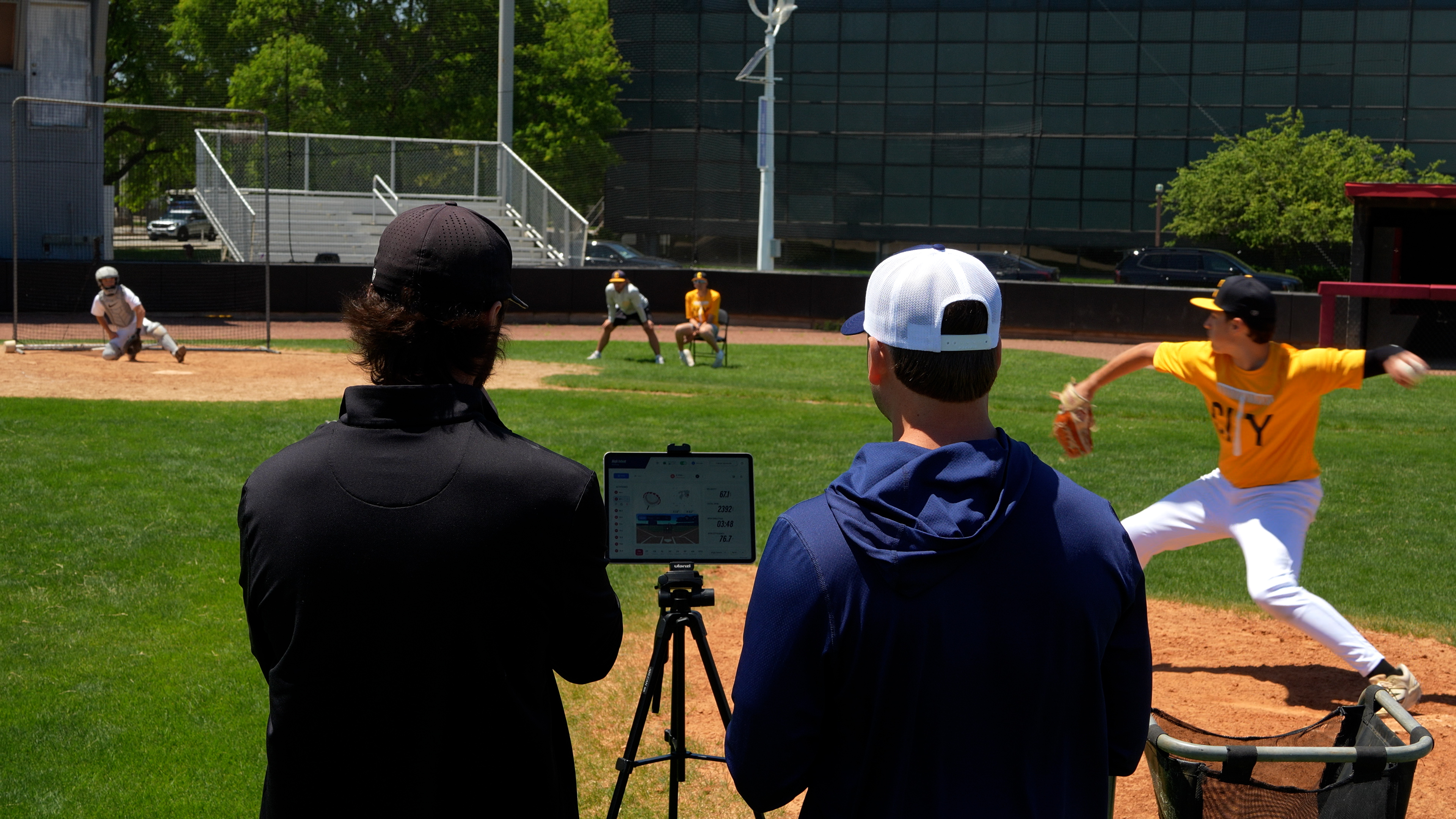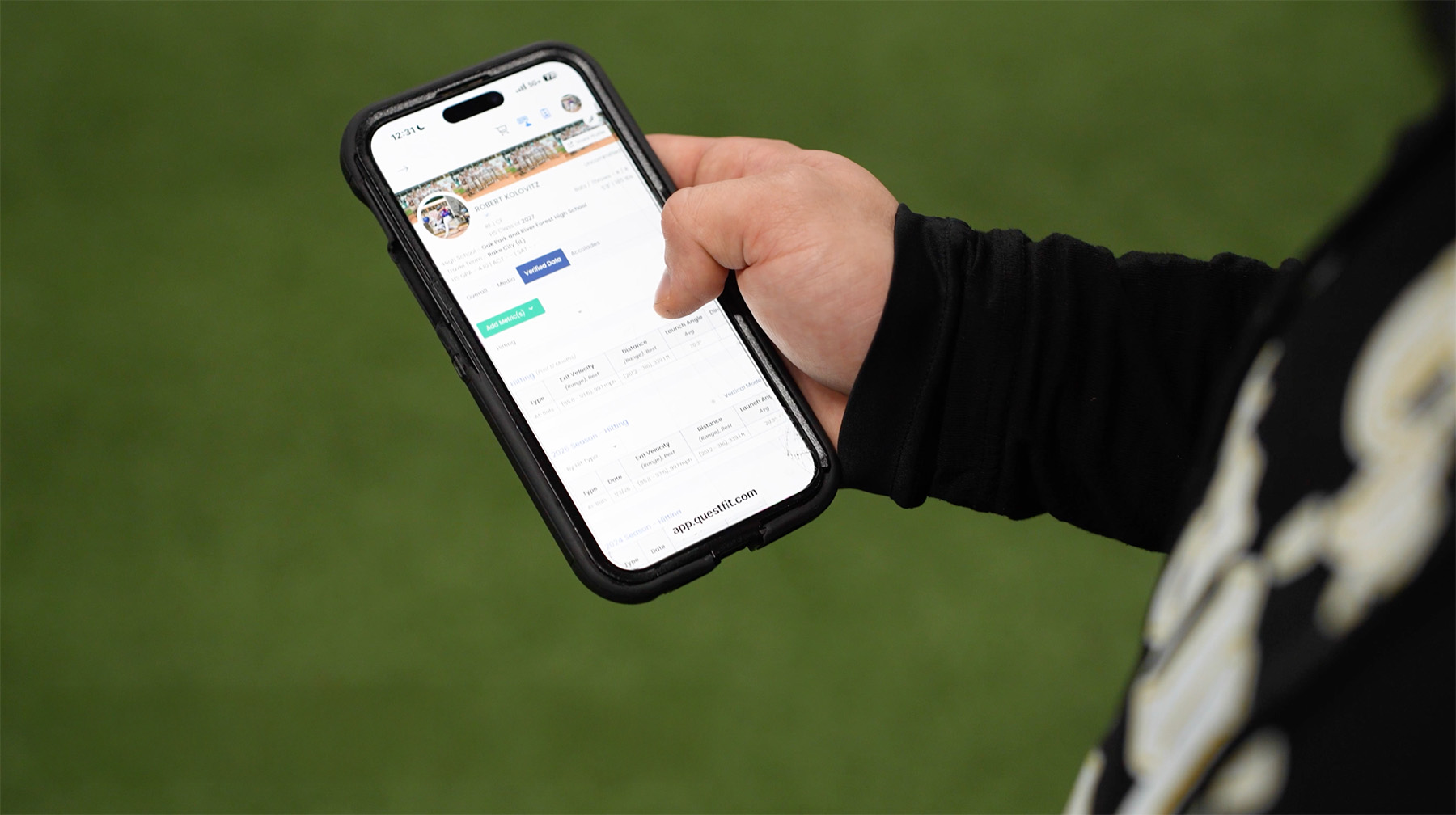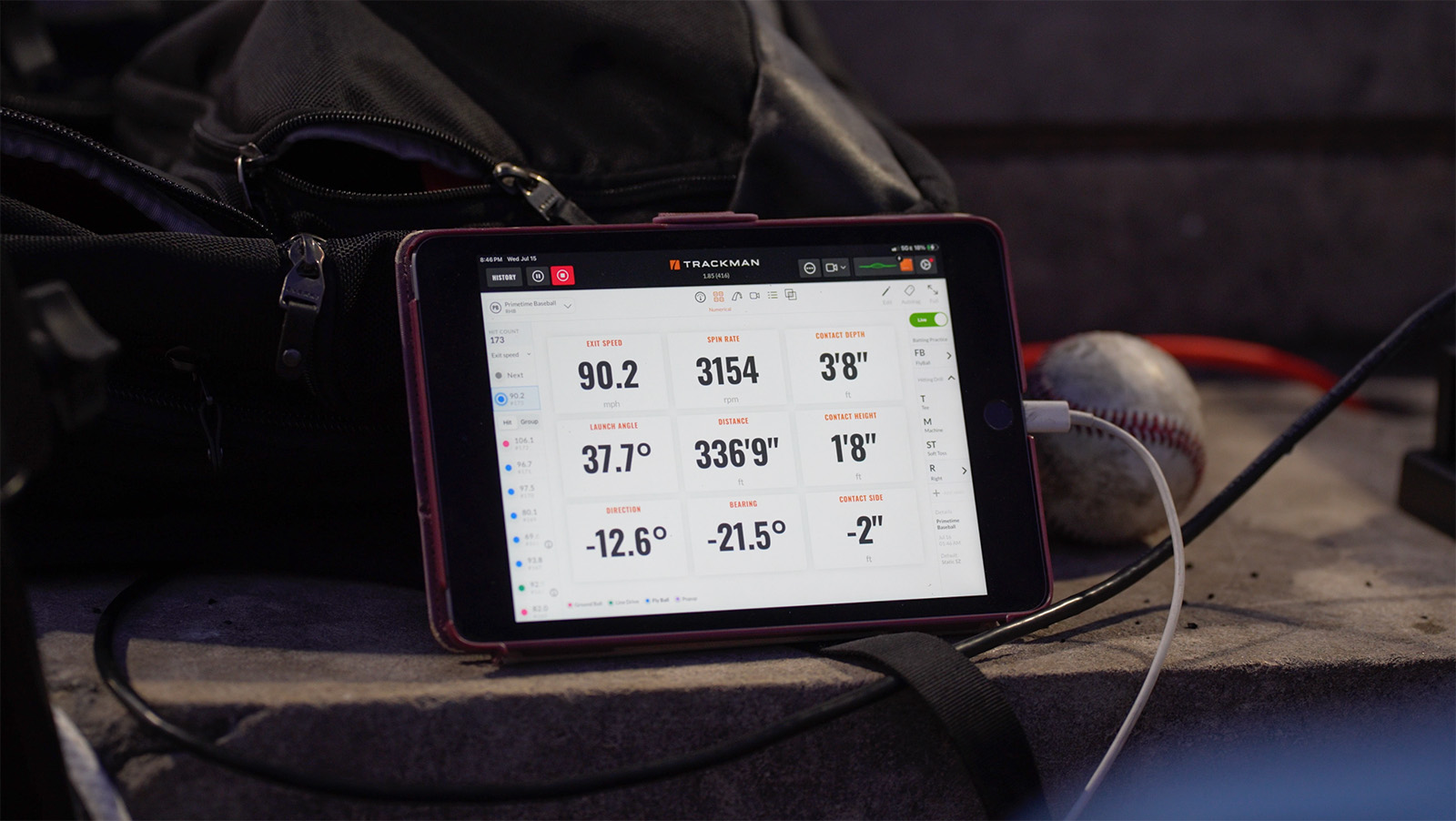
Baseball recruiting revolves around one main thing: metrics. They are one of the first things a college coach looks at when evaluating an athlete. Before they ever watch you play, those numbers help determine whether they want to learn more. Statistics tell coaches what you've done on the field, but metrics give them a better understanding of your athletic ability and potential.
Today, anyone can type a fastball velocity, exit velocity, or 60 yard dash time into an online profile. The problem is that not every number is accurate. Because of that, college coaches have to decide which information they can trust before investing their time recruiting a player.
As a former college coach, I saw this firsthand. A player's metrics would grab my attention and make me want to see him play. Then I would get to the field and realize the numbers didn't match the athlete. After that happens a few times, you naturally start questioning every profile you come across.
Baseball is a small community, and coaches trust each other's opinions. If your listed metrics are not accurate, your high school and travel coaches are not going to exaggerate them for you. Instead, it can hurt your credibility and make it much harder for coaches to confidently recruit you.
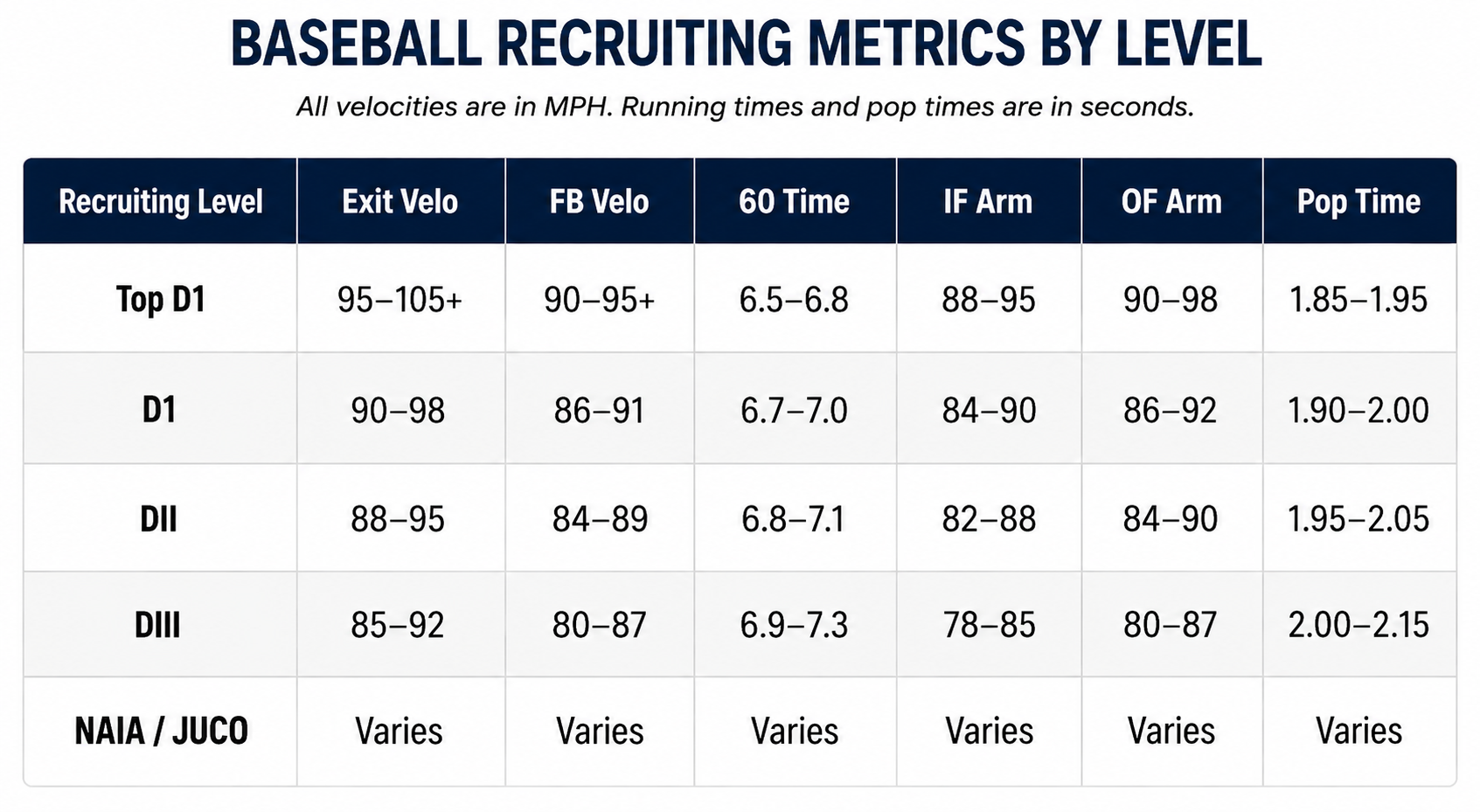
Baseball Recruiting Metrics by Level
Before looking at the chart below, there is something important to understand.
These benchmarks are general recruiting guidelines, not strict requirements. Not every player, and not every position, needs to meet every number listed. Coaches evaluate players based on positional value, projectability, game performance, baseball instincts, makeup, athleticism, and the complete skill set.
For example, a first baseman is generally expected to show above average hitting ability and power. Elite speed is usually much more important for a middle infielder or center fielder. Catcher pop time matters for catchers, while arm strength expectations can be completely different for an infielder and an outfielder.
In other words, do not look at one number in this chart and immediately decide where you can or cannot play.
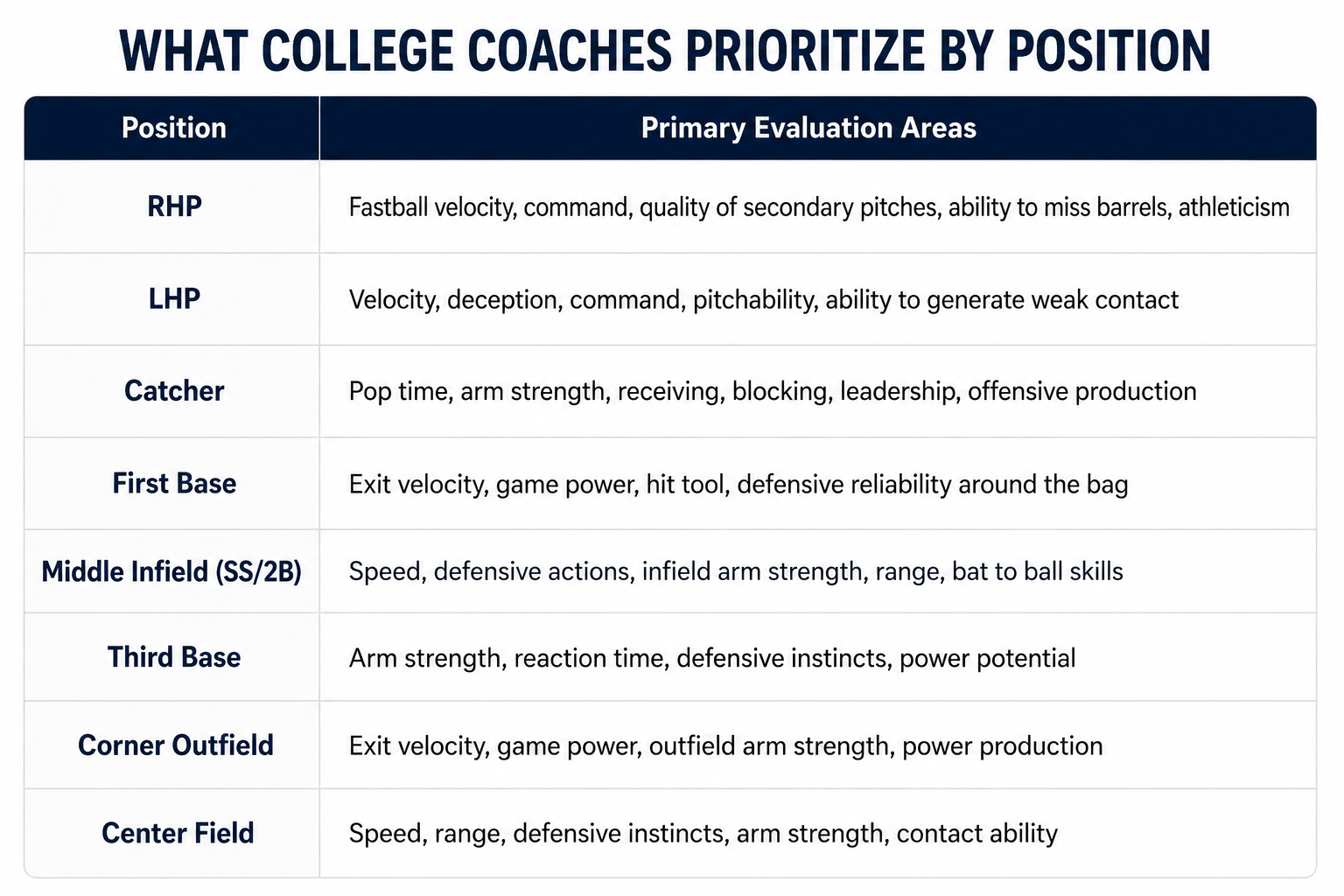
What College Coaches Prioritize by Position
The chart above gives you a general idea of how metrics may compare across different levels, but coaches are not evaluating every athlete the same way.
Position matters. A lot.
Here are some of the areas coaches tend to prioritize when evaluating each position.
So... Where Do You Fit?
If you made it this far, you're probably wondering where your numbers fit.
Maybe your exit velocity lines up with Division I, but your 60 yard dash needs work. Maybe you're an underclassman whose metrics don't jump off the page yet, but you're developing quickly. Or maybe you're a catcher with an average pop time but exceptional receiving skills. The point is, recruiting is rarely as simple as checking one box.
This is where it all comes together.
QuestFit isn't just another recruiting profile. It's the verified record of an athlete's development.
Then there's the Q-Score.
The Q-Score doesn't just compare one metric to another. It takes your verified performance data and adds important context, including your age, height, weight, athleticism, and positional expectations.
Think about it this way. A 14 year old throwing 82 MPH and an 18 year old throwing 82 MPH are not viewed the same by college coaches. The same goes for exit velocity, speed, and just about every other measurable. Development isn't one size fits all, and recruiting isn't either.
The Q-Score helps athletes better understand where they fit today, while also showing where they have the biggest opportunity to improve. It's another tool that helps tell the complete story, not just one piece of it.
Because recruiting should be about evaluating you, not trying to figure out if the numbers are real.
When coaches can trust the data, they can focus on what really matters. Finding the right player for their program.