For a lot of baseball players, Division I is the goal growing up. Those are the schools you see on TV, the programs you recognize, and usually the level everyone talks about when college baseball comes up.
There is nothing wrong with wanting to play at the highest level you can. I wanted the same thing.
But when you actually get into the recruiting process, I think the conversation needs to change a little. Instead of only asking, "What is the highest level I can play?" start asking, "Where am I going to have the best opportunity to play, develop, get a great education, and actually enjoy being there?"
There is really good baseball at the Division I, Division II, Division III, NAIA, and JUCO levels. I have been around college baseball as a player, coach, and recruiter, and one thing I would tell any family is not to make this decision based on the division alone.
You are choosing where you're going to spend some really important years of your life. Take the time to make sure you feel confident in that decision.
Understand the Different Levels, But Don't Get Stuck on the Label
There are obviously differences between Division I, Division II, Division III, NAIA, and JUCO baseball. Scholarships, resources, schedules, roster construction, academics, and the overall experience can vary.
But there can also be a huge difference between two programs that compete at the exact same level.
Not every Division I program recruits the same type of player. Not every Division II or Division III program has the same resources. There are NAIA and JUCO programs loaded with talent, and there are players at every level who could compete somewhere else.
That is why I would use the division as a starting point, not as the deciding factor.
Start researching individual schools and programs.
Look at the Roster Before You Fall in Love With the School
This is something I think athletes need to spend much more time doing.
If you're a shortstop and a program already has three young shortstops on its roster, that matters. If you're a catcher and both catchers ahead of you are seniors, that matters too.
Look at who has been on the roster over the last few seasons. Look at their class years, statistics, where they came from, and how much they actually played.
You can learn a lot about a program by looking at the players they have recruited before you.
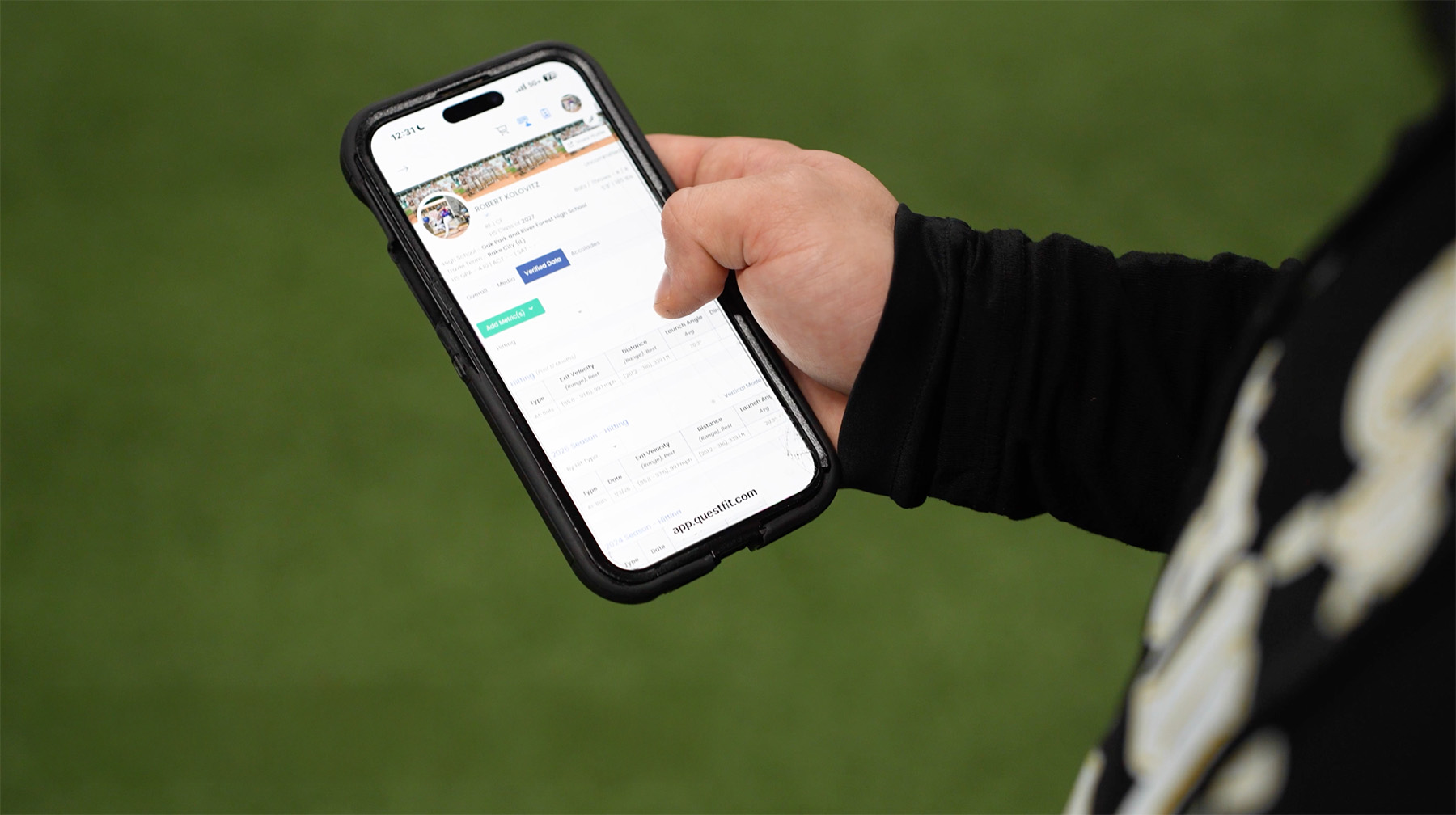
Utilize QuestFit to take that research a step further. Every college program has its own Q-Score, which you can compare to your Q-Score to get a better idea of how your verified metrics and athletic profile line up with that program.
But don't stop there.
Once you identify programs where your Q-Score lines up, dig into the roster. QuestFit gives you access to current and previous college rosters along with player statistics, so you can start looking for potential opportunities at your position.
Who is ahead of you? What year are they? Who may be graduating before you arrive? How many players does the program typically carry at your position? Who is actually getting the at bats or innings?
Now you're not just looking at a school because it says D1, D2, D3, NAIA, or JUCO. You're getting a better understanding of how you compare to that specific program and whether there may be an opportunity for you to go in and compete for a spot.
None of this guarantees you're going to play. You still have to earn your opportunity when you get there.
But it gives you more information before you make one of the biggest decisions of your baseball career.
Use the Q-Scores to help identify programs where you may fit. Use the rosters and stats to understand where opportunities may exist. Then do the rest of your homework. Talk to the coaches, visit the school, meet the players, research the academics, and make sure it feels like somewhere you want to call home.
I would rather see an athlete go through that process and feel confident about his decision than choose a school based on the logo and realize six months later that it wasn't the opportunity he thought it was.
Give Yourself an Opportunity to Compete
You should expect to compete when you get to college. Nobody should promise you a starting job, and even if they did, I wouldn't make my decision based on that.
But you should understand whether there is a realistic path to the field.
Ask the coaches how they see you fitting into the program. Ask what they like about you. Ask what they think you need to improve. Ask what the depth chart looks like at your position.
You don't have to walk onto campus and start from day one for a school to be a good choice. Sometimes you need a year to get stronger, adjust to the speed of the game, or develop another part of your skill set.
You just want to feel confident that you're entering a situation where you will have the chance to earn your opportunity.
Pay Attention to How Players Develop
The player you are when you commit should not be the same player you are when you leave college.
So when you're researching programs, look at what happens to players after they get there.
Are guys getting stronger? Are velocities increasing? Are hitters improving? Are players earning bigger roles as they move through the program?
Then talk to the coaches about development.
What does the strength program look like? How much individual instruction do players receive? What technology do they use? What does the offseason look like? How are freshmen developed when they aren't playing every day?
Those questions probably aren't as exciting as seeing a new locker room or trying on a jersey during a visit, but they're going to matter a lot more once you're actually there.
Visit the School
If you have the opportunity to visit a school before making your decision, take advantage of it.
A website, social media page, or phone call can only tell you so much.
Walk around campus. See the facilities. Meet the coaches in person. Spend time around the players if you can. Check out the surrounding area.
Pay attention to how you feel while you're there.
Can you see yourself living there?
Do you feel comfortable around the coaching staff?
Can you picture yourself around those teammates every day?
Do you like the campus and the area?
You don't need some magical feeling the second you step on campus, but you should leave feeling like this is somewhere you could be happy.
And don't be afraid to visit more than one school. The more places you see, the easier it becomes to understand what you actually like and what matters to you.
Make Sure the Academics Work
This has to be part of the decision from the beginning.
If you already know what you want to study, make sure the school has the academic program you need. If you're undecided, look at the different majors and opportunities available to you.
Ask what academics look like for baseball players too.
How do players balance travel and classes? What academic support is available? Are there majors that are difficult to complete because of the baseball schedule? What are former players doing after graduation?
There is going to be a day when baseball is over.
You want to leave college with more than baseball memories.
Talk to the Players
Coaches are obviously going to tell you about their program, but current and former players can give you another perspective.
If you get the opportunity, ask them questions.
What is a normal day like?
How does the coaching staff treat players when things aren't going well?
Do players feel like they're getting better?
What is the culture actually like?
What do they wish they knew before committing?
You don't need to turn it into an interrogation. Just have a conversation.
Sometimes the best information you get during recruiting comes from somebody who has already lived through the experience you're considering.
Do Your Research and Trust What You Find
Recruiting can move quickly, and getting an offer is exciting. It is easy to feel like you need to make a decision before the opportunity disappears.
But don't let the excitement stop you from doing your homework.
Compare your ability to the players already in the program. Look at the roster. Look at the statistics. Research the academics. Visit the school. Talk to coaches and players. Understand the financial side with your family.
Then ask yourself whether you can truly see yourself there.
You are never going to know exactly how the next four years will go. Coaches can leave. Rosters change. You may change positions. You might develop faster than expected or have to fight through injuries and setbacks.
There are things you simply cannot predict.
What you can do is gather as much information as possible and make a decision you feel confident about with the information you have.
I would never tell an athlete to turn down Division I just because another level might offer an easier path to playing time. If D1 is the right school, the right baseball opportunity, and the right academic fit for you, go compete for it.
But I also wouldn't tell an athlete to overlook a D2, D3, NAIA, or JUCO program where he loves the coaches, can compete early, has room to develop, gets the education he wants, and feels at home simply because the division isn't what he pictured when he was 12 years old.
The name next to the division matters a lot less once you're living there every day.
Do the research. Visit the schools. Ask questions. Look beyond the logo.
Then choose the place you feel confident calling home.