Winter is one of the biggest development periods we have in baseball. There aren't games every weekend, players have more time to get stronger, make swing changes, develop on the mound, and really work on parts of their game that are much harder to change when you're in the middle of a season and worried about performing that weekend.
But I think there is an important question every high school and travel program should be able to answer at the end of the winter: Did our players actually get better?
Not did they show up three days a week. Not did they get a bunch of swings in or throw a bunch of bullpens. Did they actually improve, and can we show them where that improvement happened?
I have been around baseball as a player, coach, and recruiter, and I think this is an area where programs have a huge opportunity to do more for their athletes. There is so much technology available now and so many different numbers we can collect, but just having all of that doesn't automatically mean we're developing players better. You have to know what you're looking at, why you're tracking it, and then actually use that information to help the player.
Start With a Baseline
If you want to know whether a player improved, you have to know where he started. It sounds simple, but think about how many players go through an entire offseason without really establishing that starting point. They hit, throw, lift, go through bullpens, take hundreds of swings, and then February comes around and everyone says they had a great winter.
But what actually changed?
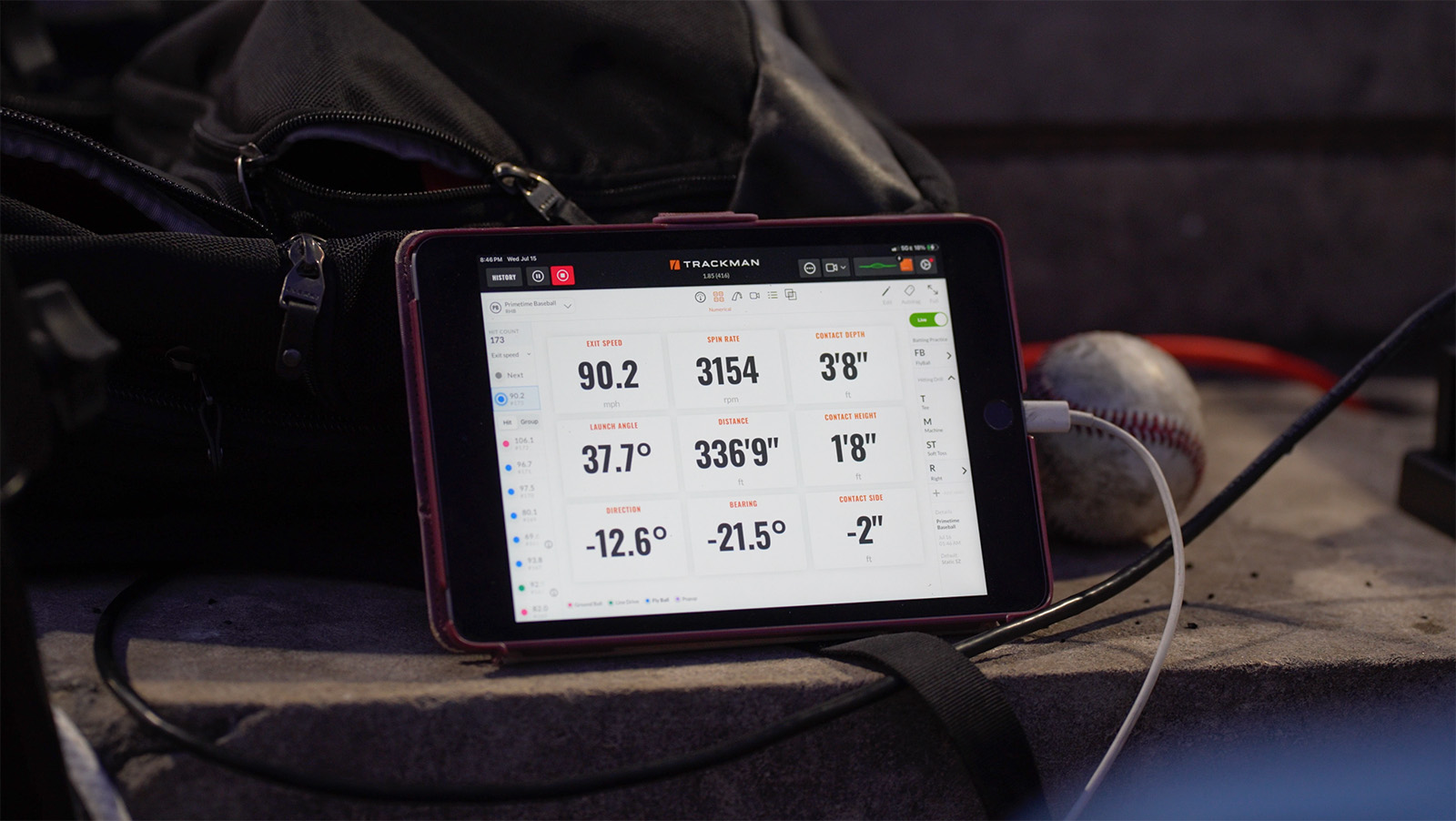
At the beginning of the offseason, establish some numbers that matter for each player. That could be exit velocity, pitching velocity, arm strength, running times, strength numbers, or other position specific metrics. You don't need to measure everything just because you have the technology to do it either. Figure out what matters for that player, where he needs to improve, and what you're actually going to use throughout the winter.
If a hitter starts the winter with an 88 MPH exit velocity and one of his goals is getting that number into the low 90s, now we have something to work toward. If a pitcher is sitting 83 to 85 and wants to get into the upper 80s, we have a starting point. Obviously there is a lot more that goes into being a good baseball player than one number, but now we're not just saying, "We want him to get better." We actually have something we can track.
And if you're already using technology to establish those baselines, make sure those numbers don't just get written down somewhere and forgotten about. With QuestFit, verified metrics can live directly on the athlete's profile, giving the player and the program a starting point they can continue building from throughout the winter. When you test again a month or two later, you're not trying to remember where somebody started or digging through an old spreadsheet. You can actually see the progress.
The Eye Test Still Matters, But It Can't Be Everything
I don't want this to turn into saying baseball is only about numbers because it's not. There is absolutely still a place for the eye test. Coaches know their players. You can see when a swing looks better, when an athlete is moving differently, when a pitcher has better command, or when somebody is simply becoming a better baseball player.
The numbers should support what you're seeing, not replace coaching.
If you're telling an athlete he had a great winter, though, I think you should be able to show him some of the reasons why. Maybe his exit velocity increased. Maybe his fastball jumped. Maybe he got faster or stronger. Maybe the quality of his contact improved. Whatever you decided was important to track at the beginning of the winter, go back to it and see what changed.
I also think this makes conversations with athletes and parents a lot better. Instead of saying, "Johnny had a really good winter," you can sit down and show them where Johnny started, what you wanted him to work on, where he is now, and what you want him to continue working on. Now everybody understands what the plan is and why you're doing what you're doing.
Don't Collect Data Just to Say You Have Data
This is probably one of the biggest things I see right now. Programs have more technology than ever. You might have Rapsodo, Full Swing, radar guns, video, strength testing, running times, and then somebody is keeping another spreadsheet with all the testing numbers.
You have a ton of information, but can you actually use it?
If I'm running a high school program or travel organization with 50, 100, or 200 athletes, I don't want to dig through different spreadsheets, apps, videos, and technology platforms every time I want to see how one of my players is doing. And honestly, coaches don't have time to do that consistently.
The goal shouldn't be to have the most technology or collect the most data. The goal should be to make the information you're already collecting easier to use. If we're collecting an exit velocity in November, I want to be able to compare it to December, January, and February. If a pitcher makes a jump, I want to know when it happened. If an athlete sets a personal record, I want that information somewhere we can actually find it again.
That's where QuestFit can become really valuable for a program. Through our technology integrations with platforms like Rapsodo and Full Swing, the data athletes are producing during training can flow directly into their QuestFit profiles. You can continue using the technology you're already training with, but now that information has somewhere to go.
Instead of manually moving numbers into another spreadsheet, you have a place where the athlete's verified metrics and development can continue building over time. For a program managing a lot of players, that makes it much easier to go back and actually see what has changed.
Otherwise, we're collecting a lot of numbers that eventually just get lost.
Give Players Something to Chase
One thing I really like about tracking development is that it gives athletes something specific to work toward. And it doesn't always have to be about who has the highest number in the organization.
The kid throwing 92 is obviously impressive, but what about the kid who started the winter at 78 and is now touching 84? That's a huge jump for that athlete.
Maybe one player is trying to add five MPH of exit velocity. Another is trying to cut two tenths off his 60. Another pitcher is trying to add velocity or improve a specific pitch. Those players are all at different starting points, and their goals should probably look different too.
This is where personal records, improvement percentages, position groups, and even leaderboards can make winter training more competitive. Players should know what they're chasing. When they reach it, celebrate it, set another goal, and keep moving.
That's a lot more meaningful than everybody just showing up and doing the same workout because that's what is on the schedule that day.
Test, Train, Retest
I also wouldn't wait until the last week before the season to figure out whether your winter plan worked. Get your baseline early, train for a period of time, test again, and see what changed.
If something is working, great. Keep building on it. If an athlete has been working toward something for six or eight weeks and nothing is changing, that's valuable information too. Maybe the training needs to change. Maybe there is something physical holding him back. Maybe the original goal wasn't the right goal.
That's what I like about having checkpoints throughout the winter. You're not waiting three months and hoping the plan worked. You're constantly learning more about the player and adjusting based on what you're seeing.
That's development to me. It isn't just having a really good workout schedule. It's assessing where the athlete is, putting a plan together, measuring what happens, and being willing to adjust that plan.
Make Sure the Numbers Can Be Trusted
This becomes even more important when development starts connecting to recruiting. There is a difference between a number you might use internally during training and something you're going to send to a college coach. If one of your players hits a new PR and that number is going to become part of his recruiting information, you want confidence behind it.
That's why verified metrics matter.
College coaches are evaluating a lot of players. If you're telling them one of your athletes is throwing 91 or has a 96 MPH exit velocity, there should be something behind that number showing that it can be trusted.
Verified data has always been a major part of QuestFit. When those verified numbers live on an athlete's QuestFit profile alongside his video and other recruiting information, the progress becomes more than something the player and his coaches know happened. It becomes something he can actually use during the recruiting process.
Think about the player who started the winter throwing 84 and is now sitting 88 to 89. That's not just a successful winter. That might change which programs are interested in him, where he fits, and what opportunities are available.
That improvement should be easy to show.
Development and Recruiting Should Work Together
This is probably the biggest thing I want programs, athletes, and parents to take away from this. Development and recruiting shouldn't be two completely separate things.
If a player spends an entire winter training and goes from 84 to 89 on the mound, that's a big development win. But now what? Does that new number get added to a spreadsheet? Does somebody remember to update his recruiting information? Does the player have new video? Do the coaches who have been recruiting him ever find out that he made that jump?
With QuestFit, the same progress you're tracking during development can continue building the athlete's recruiting profile at the same time. Verified metrics, video, development history, and recruiting information can live together instead of being spread across different spreadsheets, apps, texts, and folders.
So when that pitcher goes from 84 to 89, you have it. When a hitter makes a big jump in exit velocity, you have it. When it's time to help an athlete with recruiting, you're not spending an afternoon trying to figure out where his most recent numbers and videos are.
You're already building the information you're eventually going to need.
And I think that's especially important for high school and travel coaches. Helping one player with recruiting isn't necessarily difficult. Helping 50, 100, or 200 players while you're also trying to coach, develop athletes, communicate with families, schedule practices, and do everything else that comes with running a program is a completely different story.
QuestFit gives programs one place to assess their athletes, track development, and then use that verified progress when it's time to recruit.
That's how I think technology should work for coaches. It shouldn't give you another job. It should make the work you're already doing with your players more valuable.
Assess. Develop. Recruit.
For me, this is what it comes down to. Assess where your players are and understand their starting point. Develop with a purpose and give them something specific to work toward. Keep measuring along the way so you know whether the plan is actually working. Then when those players make meaningful improvements, use that progress to help them in the recruiting process.
Your players are going to put a lot of hours into baseball this winter, and coaches are going to put a lot of hours into helping them. Parents are going to invest a lot of time and money into it too. We should all want to know that those hours are actually moving the player forward.
You don't need every metric imaginable, and you don't need to turn baseball into a spreadsheet. Pick the things that matter. Establish where the player is. Track them throughout the winter. Make adjustments when you need to.
Then when you get to the end of the winter, you shouldn't have to tell a player, "I think you got better."
You should be able to show him.